Matchstick Puzzles
A box of matches has always been more than a way to light a fire. Long before anyone put a phone on the table, a matchbox was what you reached for when you wanted to set somebody a puzzle: a handful of small wooden lines, and a question that could keep a whole table quiet for a while.
Every one of our oak matchboxes goes out with a small folded card tucked inside, sitting on top of the matches, and on that card are two puzzles. This page holds the answers, and a good many more puzzles besides.
All you need is a box of matches and a flat surface. The puzzles come first and the answers are gathered together further down, so nothing gives itself away before you are ready for it.
The two puzzles on your card
Both are old ones, and neither needs anything but the matches themselves. Spent matches work perfectly well, so there is no need to waste a boxful getting them wrong.
Puzzle five — three squares from four
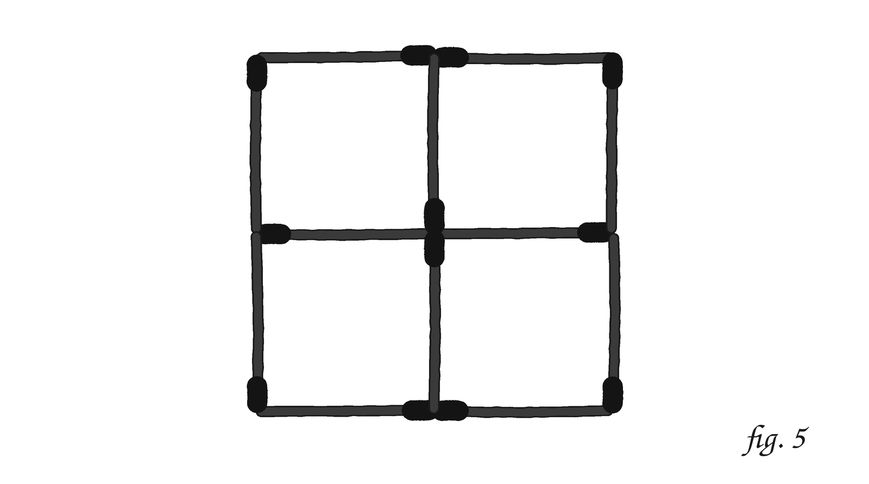
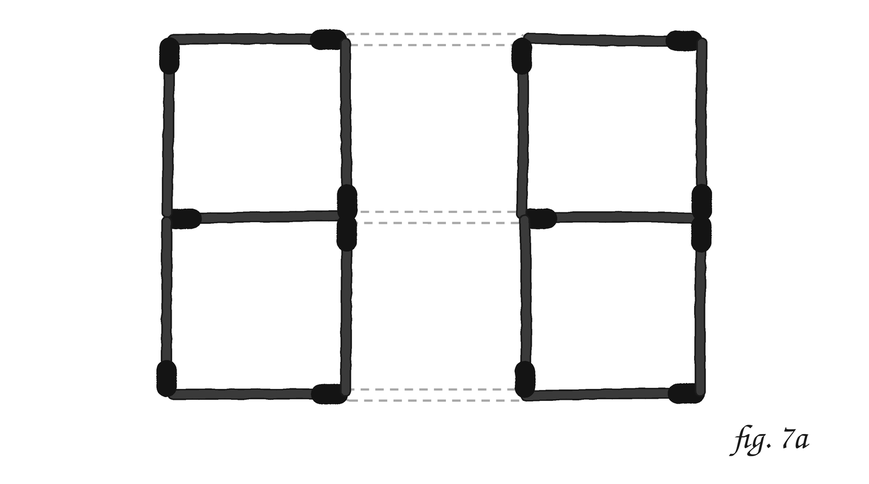
Twelve matches, laid out as a window with four panes: two squares across and two squares down. Move four matches so that exactly three squares are left, all the same size, with no match left spare.
Puzzle nine — a smaller field
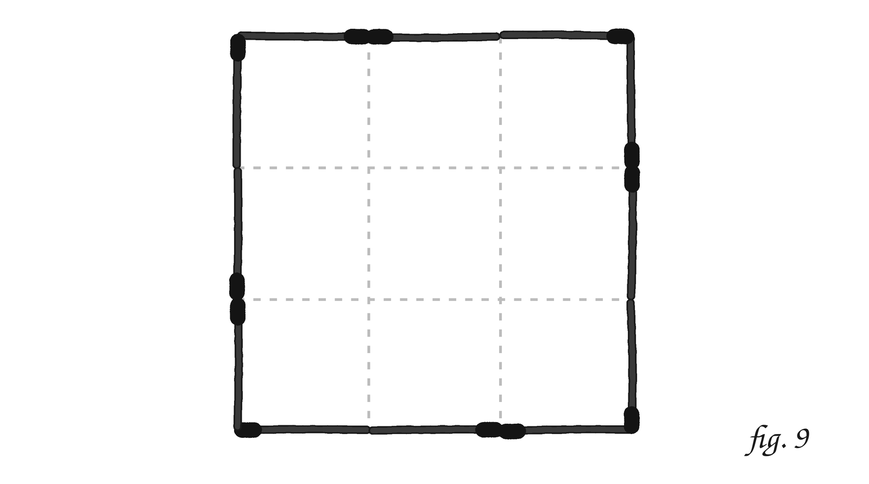
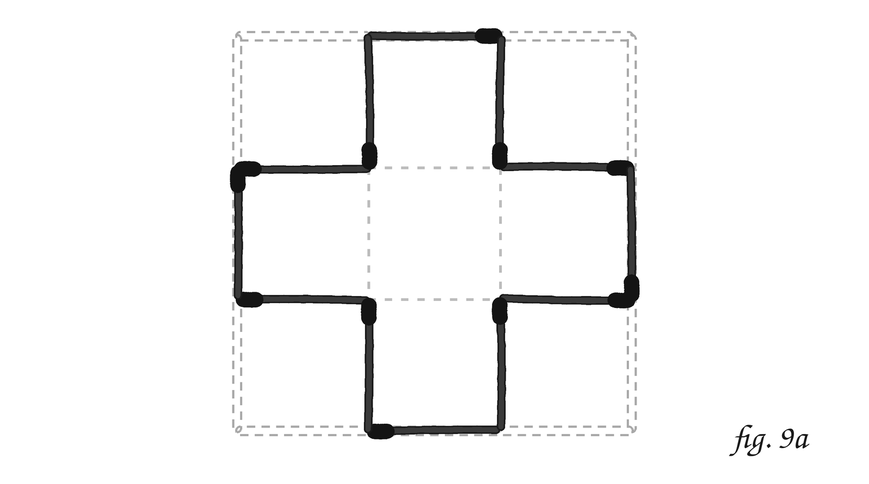
Twelve matches, laid out as a square three matches to a side. Ruled off inside, it would hold nine small squares, each one match wide. Rearrange all twelve matches so that they enclose exactly five of those small squares instead. Every match must be used, and every match must lie flat along the edge of the shape.
More puzzles
Eight more, roughly easiest first. Unless a puzzle says otherwise, every match must be used, and none may be broken or bent. One or two of them will ask you to think a little beyond the flat of the table.
Puzzle one — six squares
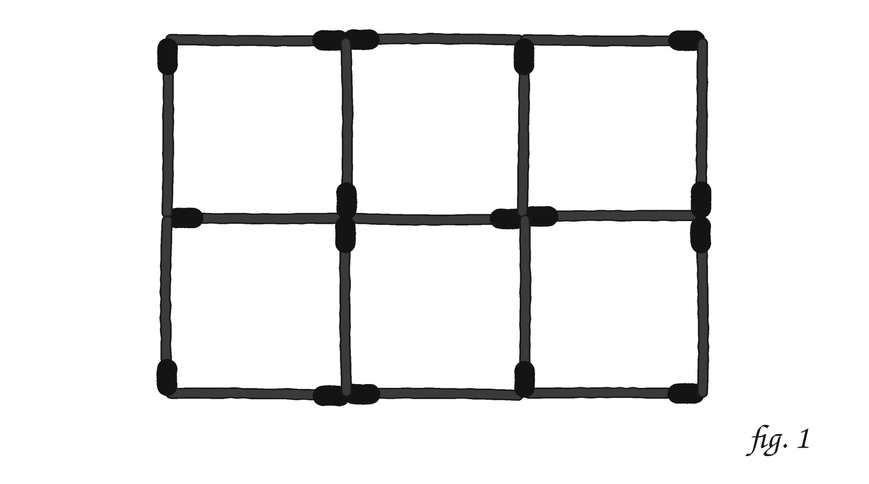
Lay out seventeen matches as a grid two squares tall and three squares wide, so that you have six small squares in all. The simplest way to build it: lay three rows of three matches running left to right, one above the other, then close the columns with four pairs of upright matches — one pair at each end and two pairs inside — so that every one of the six squares is complete.
Now take away five matches so that exactly three squares are left. Every match still on the table must belong to one of those squares, and all three must be the same size as the ones you began with.
Puzzle two — the Roman numerals
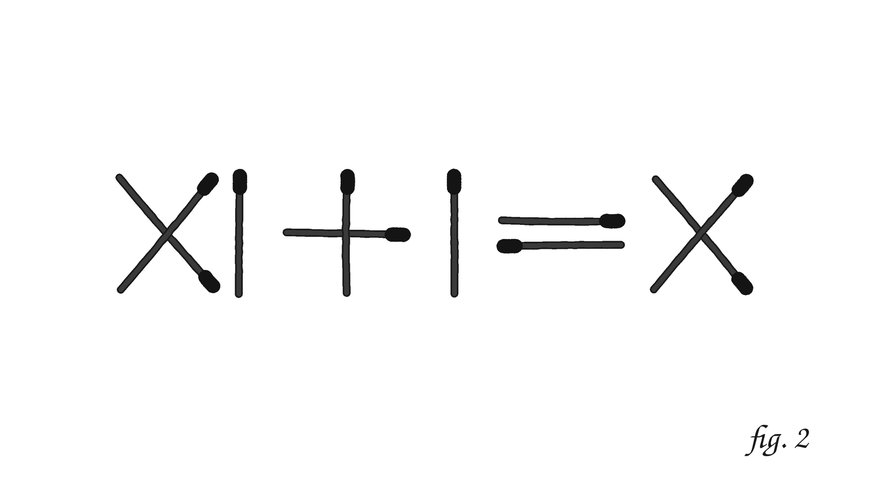
Lay out this equation in matches. Each I is a single match, each V is two matches leaning together, and each X is two matches crossed. The plus sign takes two matches and the equals sign takes two more.
XI + I = X
As it stands it reads eleven plus one equals ten, which is plainly wrong. Move one match, and one match only, to make it true. Nothing may leave the table, nothing may be broken, and reading the whole thing upside down does not count.
Puzzle three — two triangles from five matches
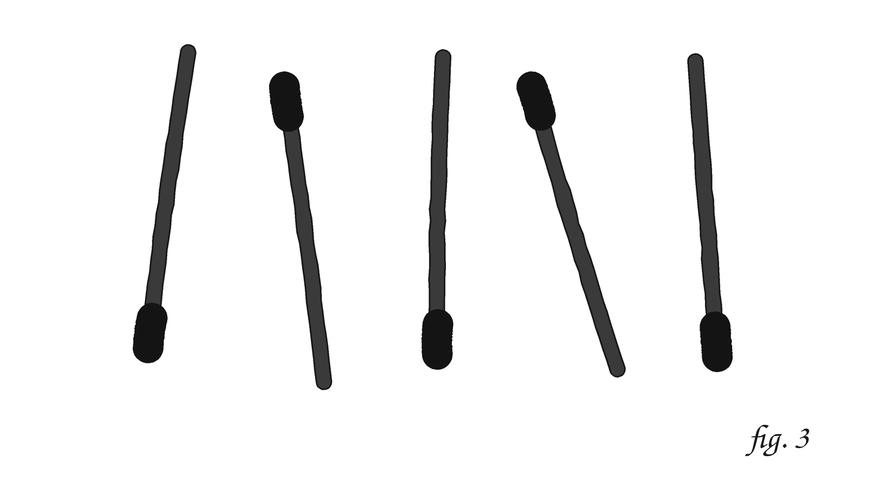
Make two triangles using five matches. Every side must be exactly one match long.
Puzzle four — five plus three
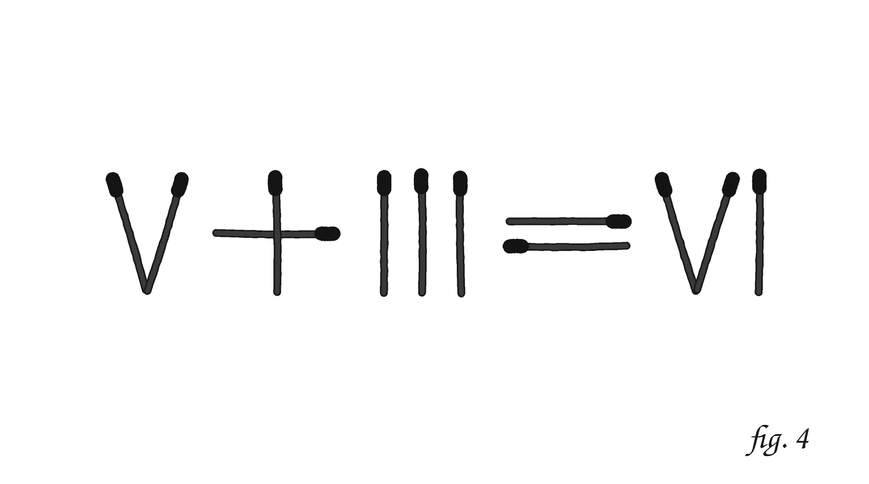
Lay out: V + III = VI. Five plus three does not equal six. Move one match to make the line true.
Puzzle six — six plus three
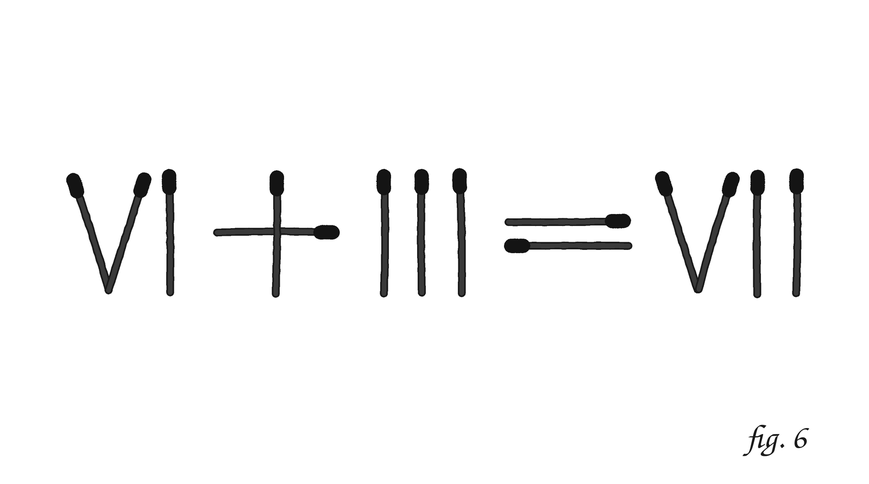
Lay out: VI + III = VII. Six plus three does not equal seven. Move one match.
Puzzle seven — four squares from six
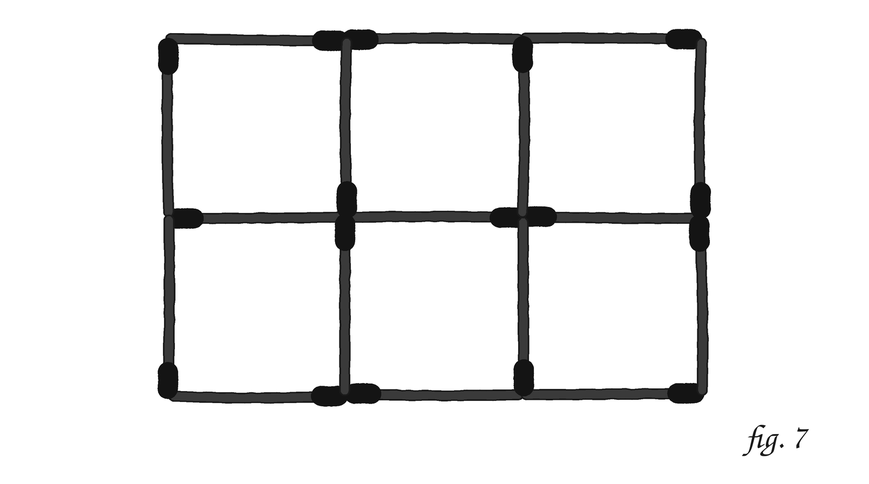
Build the two-by-three grid from puzzle one again: seventeen matches, six small squares. This time take away only three matches, and leave four squares.
Puzzle eight — the awkward nine
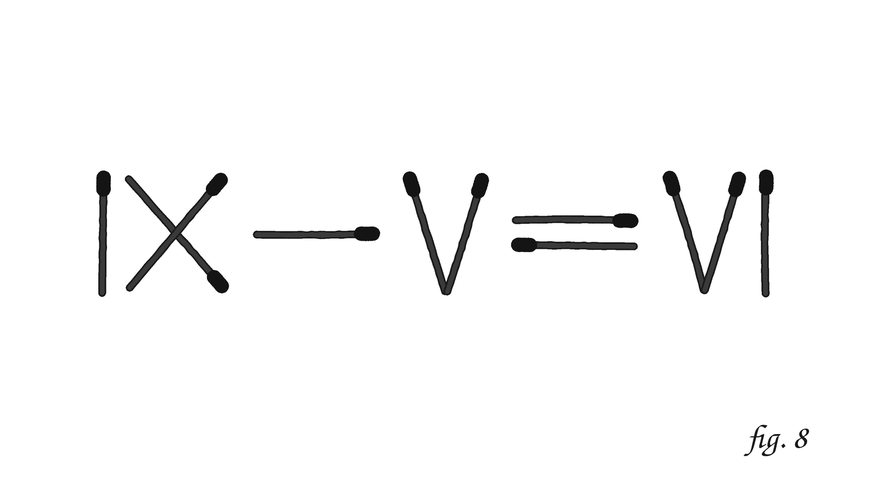
Lay out: IX − V = VI. Nine take away five does not equal six. Move one match.
Puzzle ten — four triangles from six matches
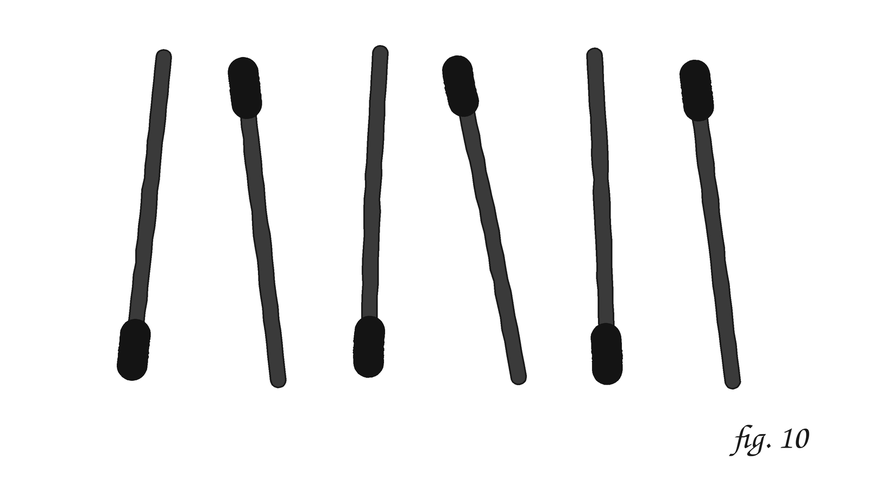
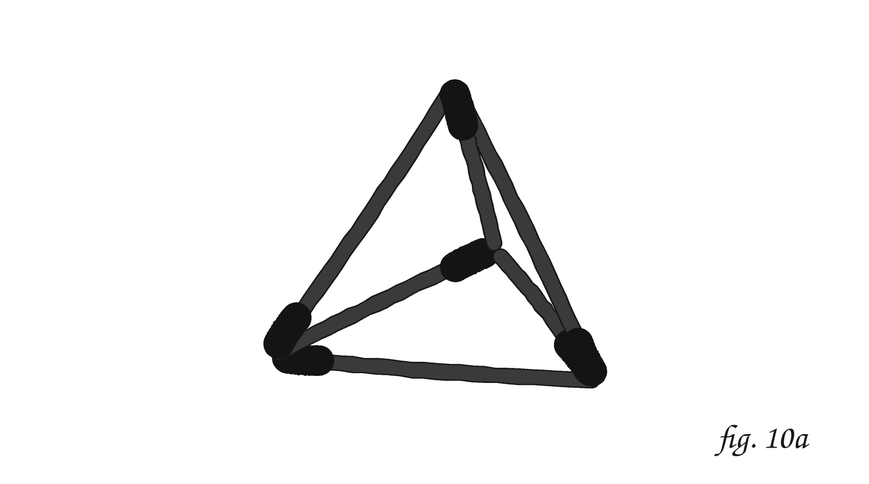
Make four triangles using six matches. Every side must be one match long, and all six matches must be used. This is the one that defeats people, and the reason is nearly always the same: they keep the matches on the table.
Solutions
Answers follow, in puzzle order. If you are still turning one of them over, this is the place to look away.
Puzzle one — the solution
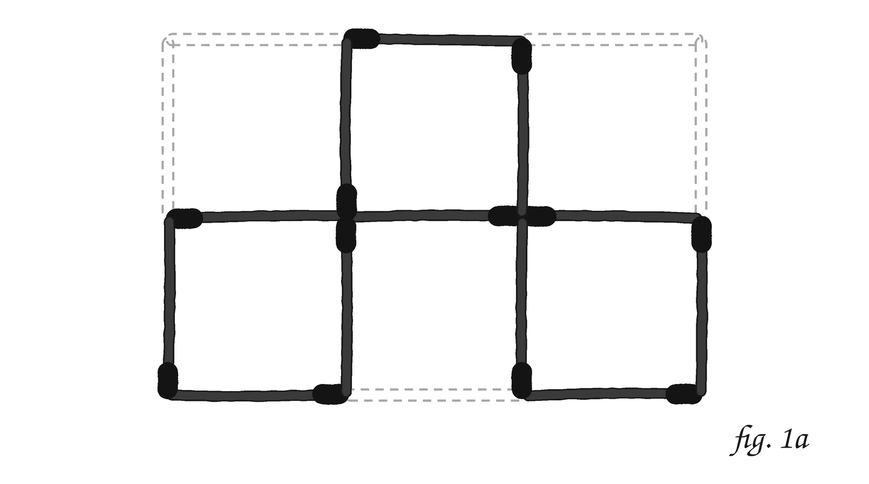
Take away five matches: the bottom edge of the middle square on the bottom row, and then, from each of the two upper corner squares, its top edge and its outer upright.
What remains is three squares set out like a zigzag — bottom left, top middle, bottom right — each touching its neighbour only at a corner. Twelve matches are left on the table, and every one of them is part of a square.
Puzzle two — the solution
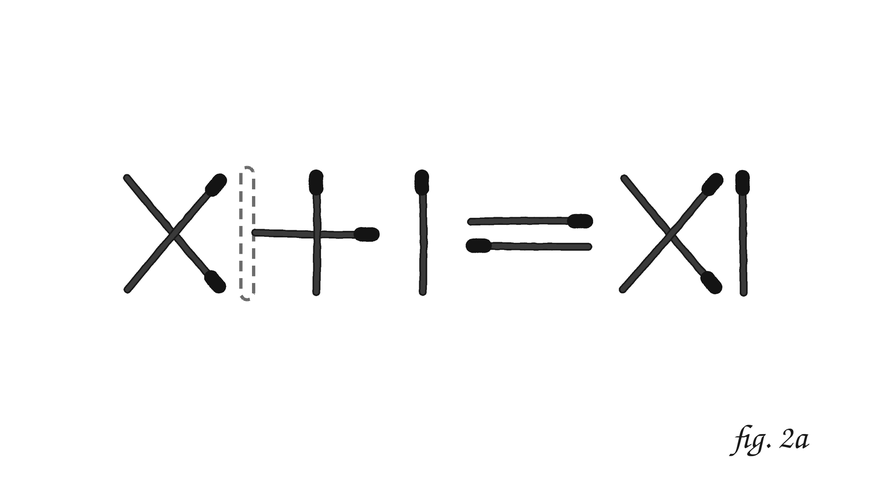
Take the single match that forms the I in the opening XI, so that the first number becomes X, and lay it down after the X on the far side of the equals sign, so that the answer becomes XI.
The line now reads X + I = XI: ten plus one equals eleven.
Puzzle three — the solution
Lay four matches out as a diamond, then lay the fifth across it, joining the two corners that sit closest together. Squeeze the diamond until that fifth match reaches from one corner to the other exactly, and you are left with two triangles, each with three equal sides.
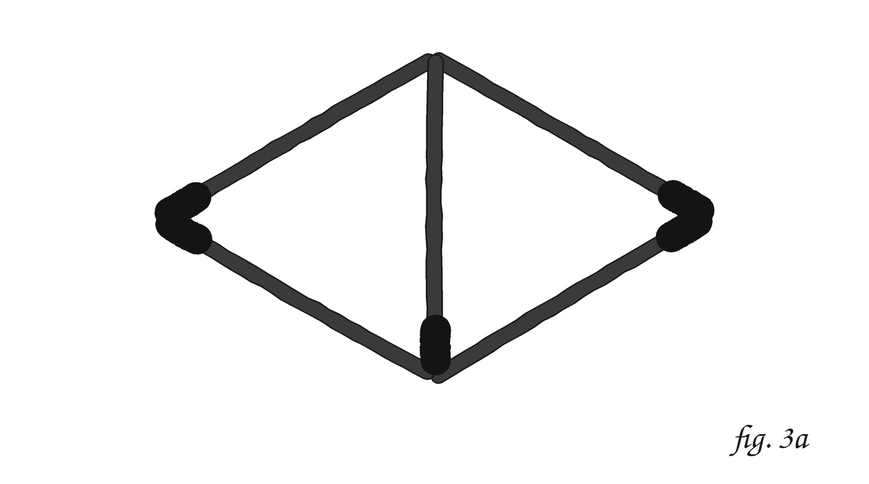
Puzzle four — the solution
Take one match from the III, leaving II, and add it to the VI on the far side, making VII. The line reads V + II = VII: five plus two equals seven.
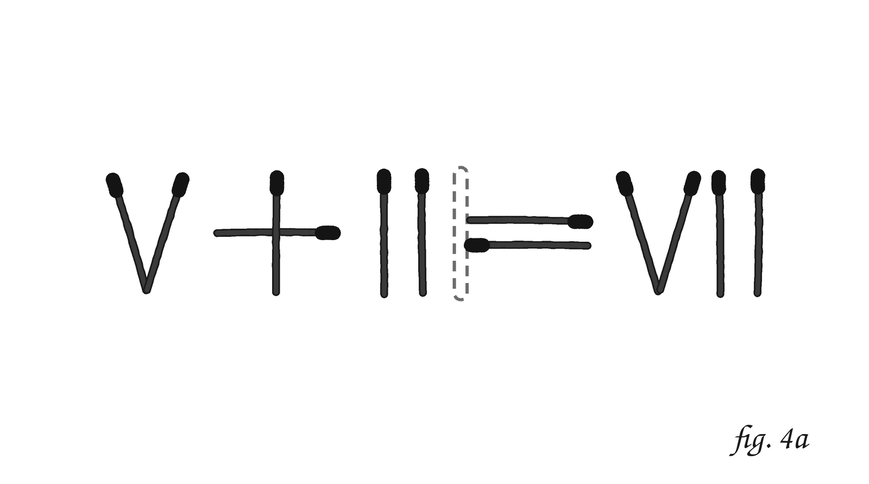
Puzzle five — the solution
Take the top edge and the right-hand upright from the top-right pane, and the bottom edge and the left-hand upright from the bottom-left pane. That leaves two complete squares, the top-left pane and the bottom-right pane, touching only at a corner. Build the third square with the four matches now in your hand, off to one side.
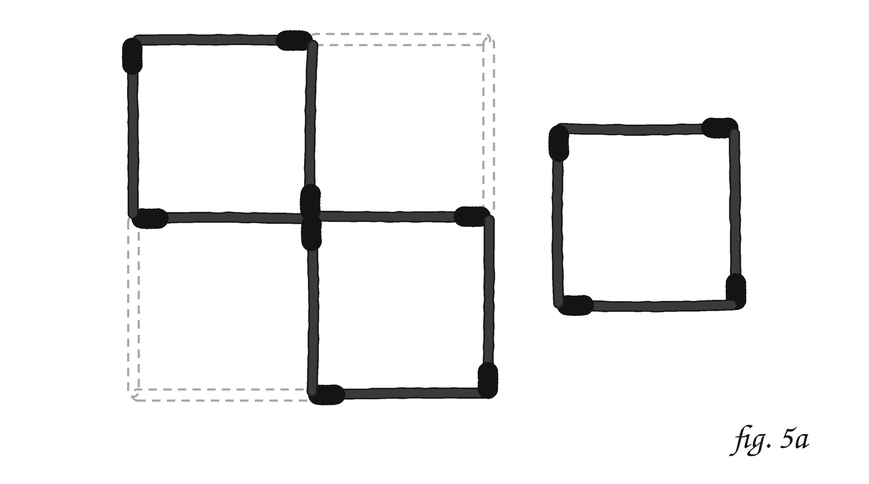
Puzzle six — the solution
Take the I from the VI, leaving V, and add it to the VII, making VIII. The line reads V + III = VIII: five plus three equals eight.
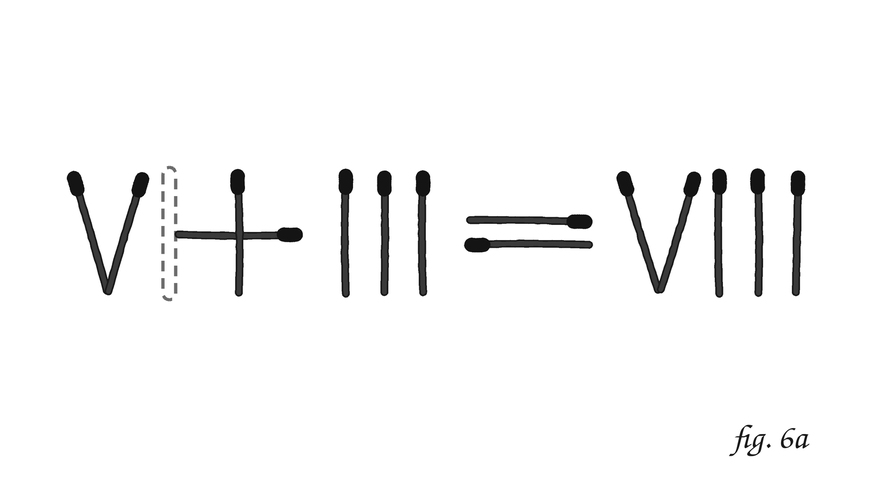
Puzzle seven — the solution
Take away the three matches lying left to right that belong to the middle column — its bottom edge, its middle edge and its top edge. The two middle squares fall away, and what is left is a column of two squares at each end: four in all, with every one of the remaining fourteen matches still doing useful work.
Puzzle eight — the solution
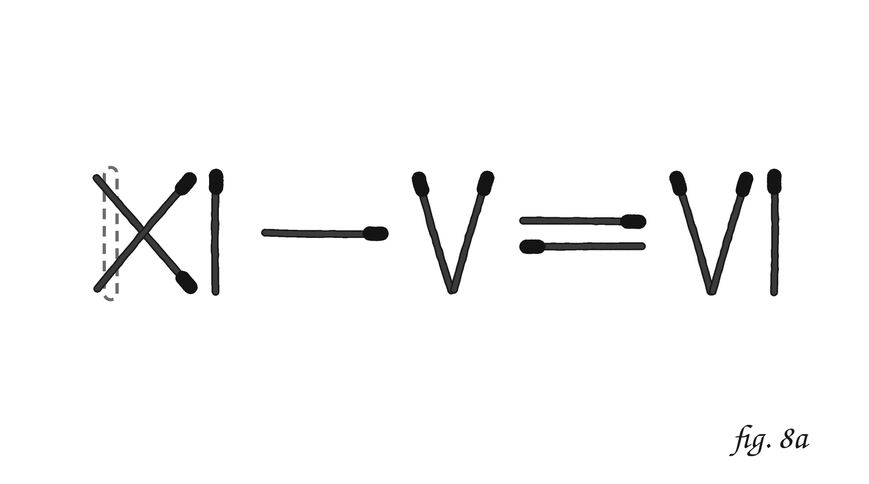
The I in IX sits to the left of the X, and that is what makes it a nine. Move that single match to the right of the X instead, and it becomes eleven. The line reads XI − V = VI: eleven take away five equals six.
Puzzle nine — the solution
Make a cross. Start with one small square in the middle, then add a small square against each of its four sides. Trace round the outside of that shape and you will find the outline is exactly twelve matches long, and it encloses five small squares.
Puzzle ten — the solution
Lift them off it. Lay three matches out as a triangle on the table, then stand the remaining three up from its three corners so that they lean inwards and meet at a single point above the middle. You have built a small three-sided pyramid. It has six edges and four faces, and every face is a triangle.
Keep your matchbox going
Matches run out, and the strike along the side wears smooth in the end. Neither is a reason to part with the box.
- Replacement - Matches & Strikes — a fresh supply of matches and new strikes for a box you already own.
- Jumbo Matchbox — the larger box, for a hearth that gets properly used.
- Matchbox with personal message on the back — engraved front and back, with words of your own.
- Simply a Matchbox (No engraving) — plain oak, left to age on its own terms.
Delivery is free on orders over £150, should you be putting a few things together.
If one of these puzzles has beaten you, or if you have one of your own that ought to be on this page, we would be glad to hear it: info@theoakandropecompany.co.uk.