Our Friends: Bergs Potter
Where life grows.
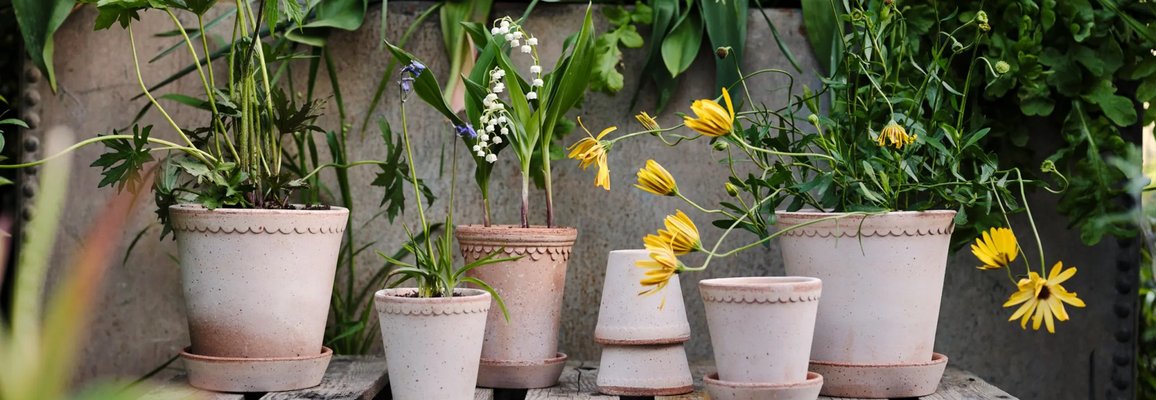
We had been admiring these pots for years before we knew their name. You will have seen them too, almost certainly, holding an olive tree outside a favourite restaurant or a geranium on a windowsill that made you stop and look. Quietly handsome, never shouting. The sort of thing you assume has simply always been there.
When we finally traced them back to Bergs Potter, it made perfect sense, and we laughed at ourselves for not guessing sooner. Of course there was a fellow Scandinavian root. Everything about this company speaks to us, right down to the words printed on their beautiful tote bag: flowers of tomorrow. We read that and thought, yes. That’s us too.
This is the beginning of what we hope will be a long friendship.
A shop full of pots, and a quiet act of hope
Bergs Potter’s story begins in one of the bleakest winters of the Second World War. In 1942, a young man named Victor Berg inherited a ceramics shop in the Nørrebro district of Copenhagen, its shelves full of empty clay pots. Rather than sell them bare, he began filling them with flowers, a small act of colour and life for neighbours living through dark days.
More than eighty years later, the family is still at it, and the belief that started it all hasn’t changed: plants make people thrive. We rather love that a business born from wanting to brighten ordinary lives is the one whose pots will now sit in your windows and on your tables.
The old way turns out to be the best way
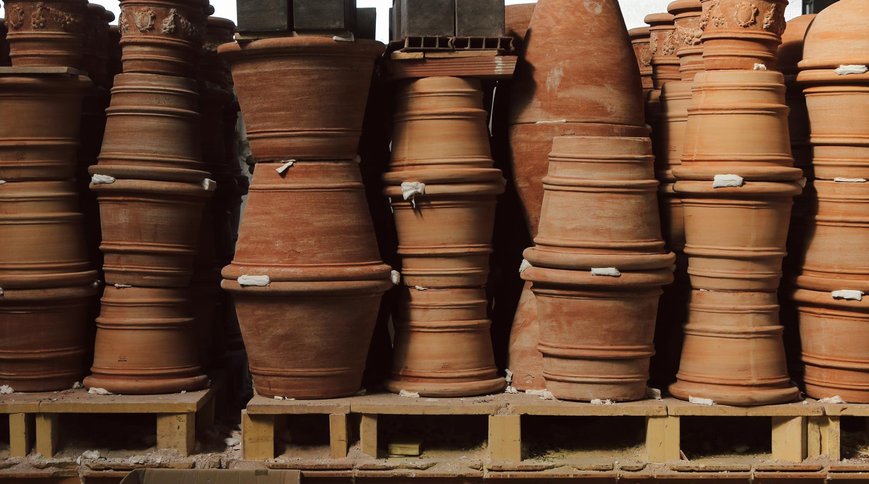
Victor’s children went looking for the finest clay they could find, and found it in the hills of Tuscany. To this day, every Bergs pot is made from certified Galestro clay, rich in iron, magnesium and silica, by artisans working the way they have for a thousand years. The Italians have a name for it, spoken with great affection: la terra cotta fatta a mano. Baked earth, made by hand.
There is no shortcut. Clay is thrown on the wheel or pressed in handmade plaster moulds, lifted out by hand, trimmed, air-dried, then fired slowly in the heat until it sings. It takes the best part of eight weeks to make a single pot. No two are ever quite alike. We make the things we wish existed, and so, it turns out, do they.
It takes the best part of eight weeks to make a single pot.
Beautiful, yes. But these pots breathe.
Here is the part we find quietly wonderful. A Bergs pot isn’t only lovely to look at. It is alive to the plant inside it.
Raw terracotta is porous. Water it, and the clay darkens for a moment, then slowly returns to its warm, sandy tone. That colour change is the pot breathing. As water passes through the clay, it carries air and moisture to the roots, regulates their temperature, and gives a plant very nearly the conditions it would have in open ground. Proper drainage, room to breathe, moisture held just so. If your plants could choose, this is what they’d ask for.
And like all honest materials, terracotta only improves with time. It ages gracefully, weathers a little, gathers a soft patina, and looks better in five years than it did on the first day. Made, as Bergs say, to live for generations.
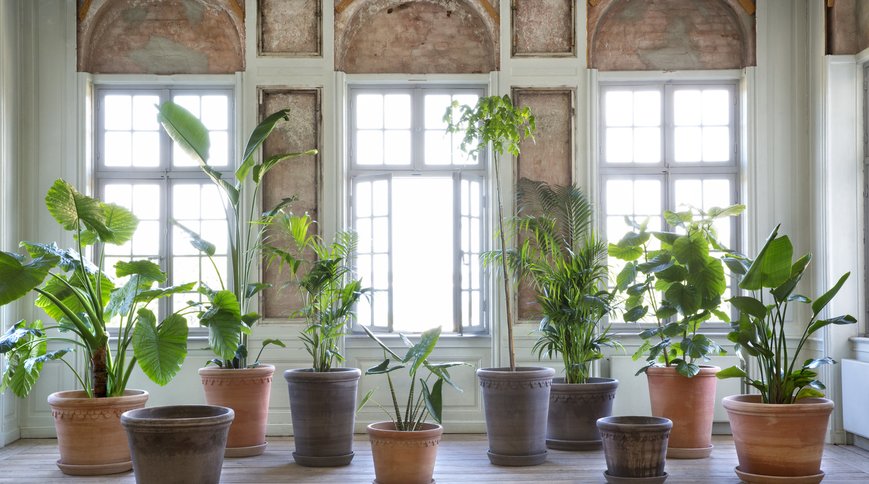
Pots your plants love
Bergs Potter have long known that the pot matters as much as what grows inside it. Here is their guide to getting it right — a season’s worth of wisdom in six illustrations.
Illustrations courtesy of Bergs Potter.
Why we’re proud to share them
The aligned values. The respect for raw materials. The conviction that the slow, traditional, properly-made way is worth the wait. These are pots that earn their keep, useful and beautiful in equal measure, designed to be handed down rather than thrown away.
The words and photographs here are Bergs’ own, generously shared. We think you’ll fall for them as we have.
Flowers of tomorrow, indeed.
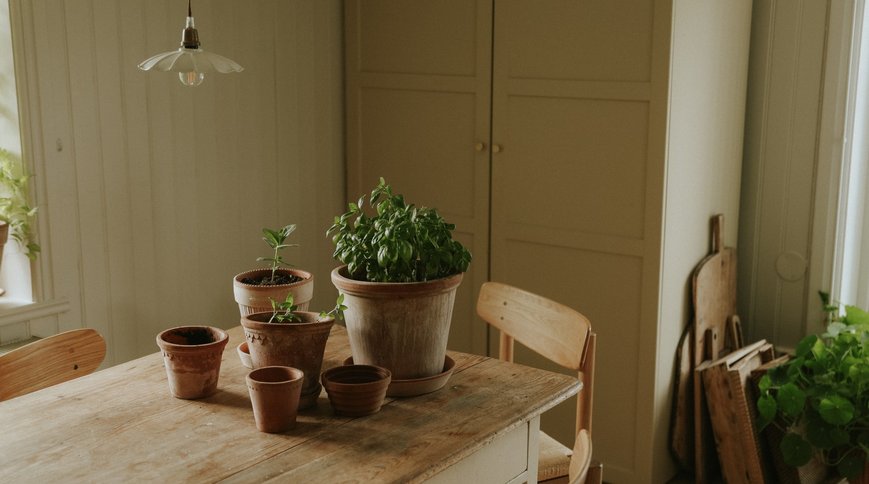
Photography courtesy of Bergs Potter.