Screen Etiquette
Where the phones go while the family talks, and how a block of oak ended up with the job. It began as a reaction to family gatherings, and it works because nobody argues with a shelf.
By Jeanette Aurdal
Nobody ever wrote down the rules for phones at the table. Our grandparents had rules about elbows and about who carves, and nobody had to think very hard about either. Phones arrived faster than the manners could keep up, and most households are still making it up as they go along. We are too.
It isn't the first time. When printed books spread in the 1500s, some people thought they were dangerous. Now we bribe children to read. Etiquette catches up with new things eventually. It just tends to need a bit of help.
Guilty as charged
Ours started with family gatherings, or rather with a great many of them. In the autumn of 2015 we made our first Family Charging Station, a long piece of oak with slots for up to eight phones and tablets. Our note for it at the time was honest about the reason. It was "a reaction to all those family gatherings where everybody is on their devices and not actually present." Then, in brackets: "Guilty as charged!" We weren't pointing at anyone else. The idea was that "your technology can recharge together in one place, while the family recharges properly somewhere else."
Customers took it from there, as they usually do. We carved WE RECHARGE HERE… on the early ones, and before long people were sending us their own words. By November 2017 one station on the workshop shelf read NO SCREENS AT THE TABLE, PARKERS! A house rule had gone into wood, so nobody had to say it out loud again.
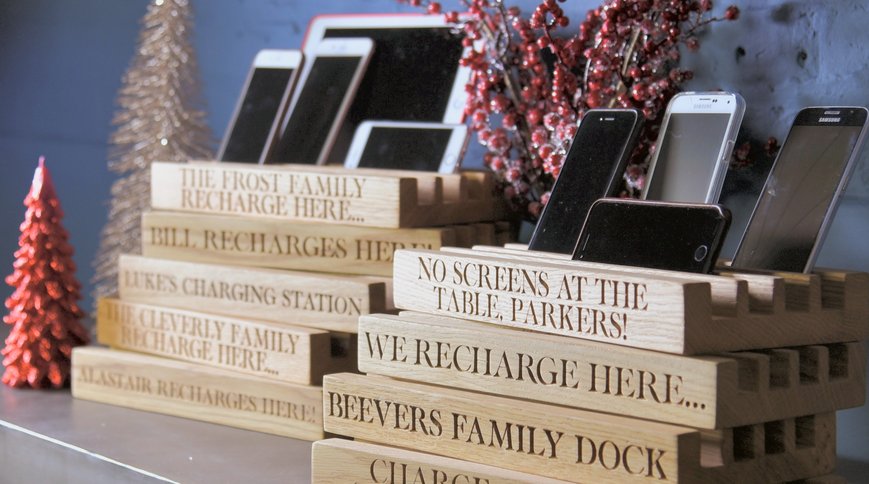
Nobody argues with an engraving
That's the part I find most interesting. A rule said out loud is a nag. A rule carved in oak is just where things go, and nobody argues with an engraving. We've long believed that the finishing touches around a home are there to take decisions away when you're in a rush. Whether to check the phone at dinner is a decision most of us make more often than we'd care to admit. Give the phone a place on the dresser and the decision is made before anyone sits down. It works best, I've found, when the grown-ups' phones go in first.
I was talking about an epidemic of screen addiction long before the pandemic, and there is even a YouTube video of me doing it, filmed back in 2015. Then came 2020, when screens leapt into every part of life and the need for reminders like these grew enormously. Reversing the trend is proving difficult.
More than ten years on, the idea has a piece of its own. No Screens at the Table is a small square of oak, fifteen centimetres across, with slots for the phones and those words carved along the front. Some keep the words. Others change them, and the order book is a lesson in family life. NO SCREENS IN BED. TIME TO SWITCH OFF DADDY. PLEASE HOLD. THE LANDLINE. One went for DEN BESTE TIDEN ER SAMMEN, which is Norwegian for "the best time is together" and hard to improve on.
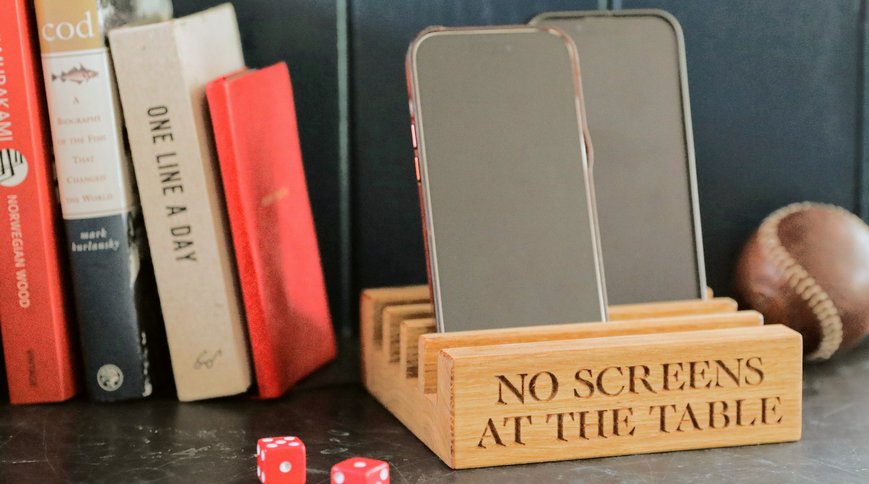
None of this is against phones. The phone is how the cousins on the other side of the world see the pudding arrive, and how the argument about who won at charades finally gets settled. The only question is where it lives for the hour the food is on the table. As a café door in Berlin puts it, some moments are better lived than shared.
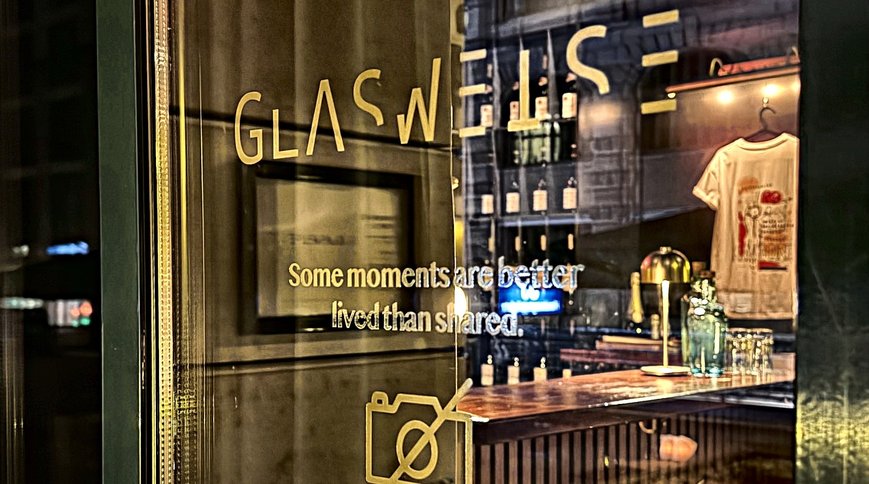
The hour the food is on the table
Christmas is when that hour counts for most. It's the meal people travel for, with extra chairs from the kitchen and a conversation that carries on long after the plates have gone. Nearly half of the No Screens pieces we sell are ordered in November and December, so we suspect we're not the only ones who think so.
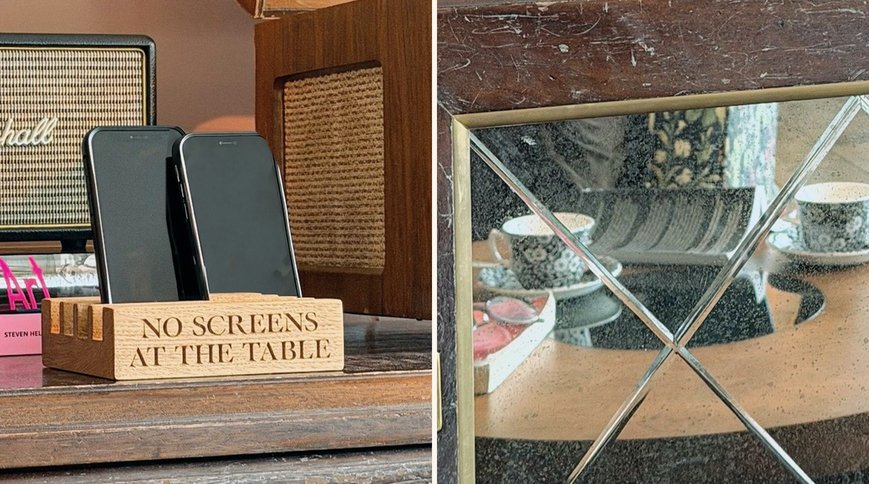
One hour a day on a screen adds up to fifteen days a year. We liked that sum enough to carve it into oak. We can think of better places to spend a few of those days than looking down. The table, for one. Somebody has to pass the bread sauce.
The longer story of how the first station came about is on our Stories page.